
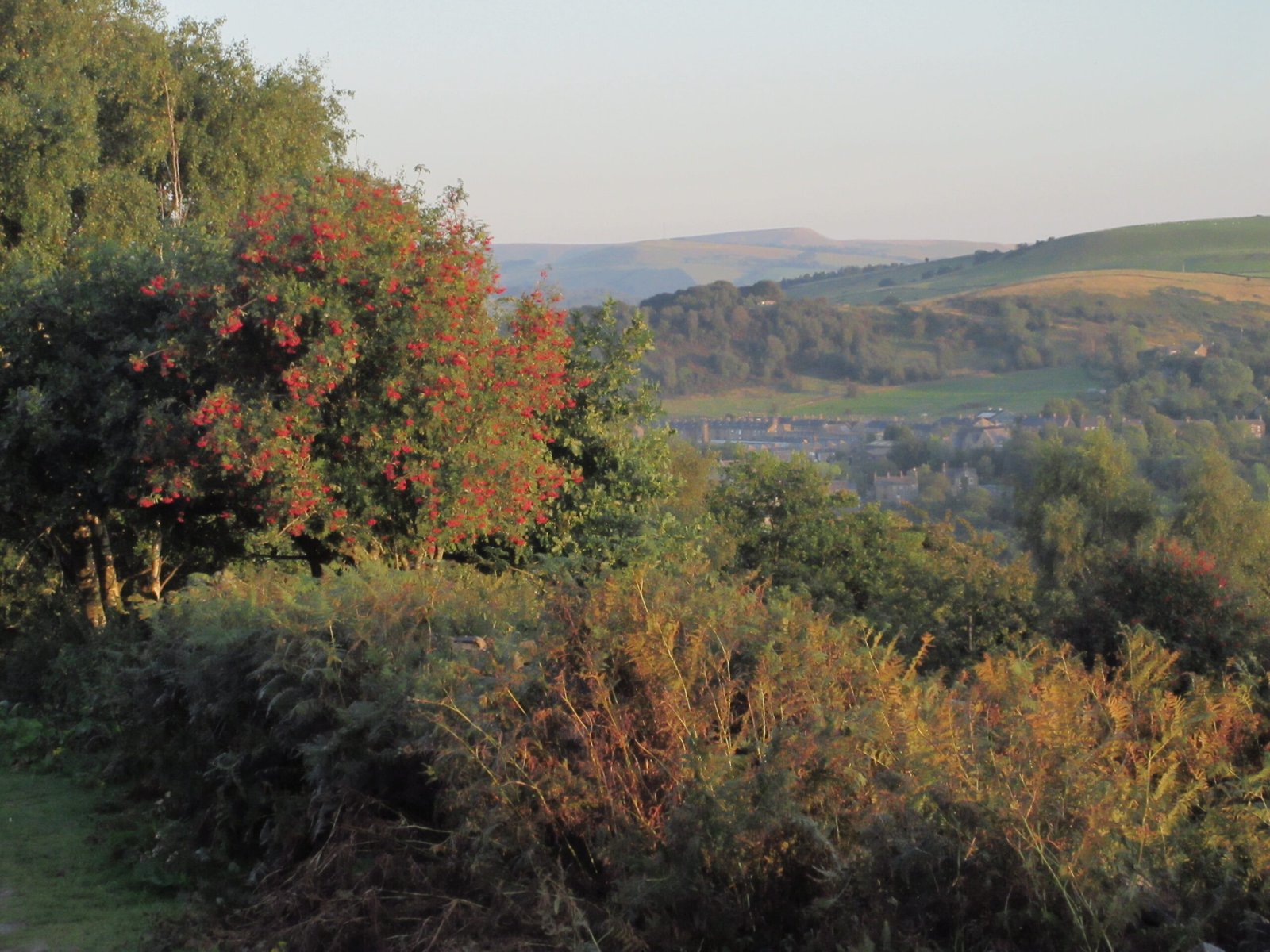
The Committee was elected at the 2025 Annual General Meeting, and comprises:
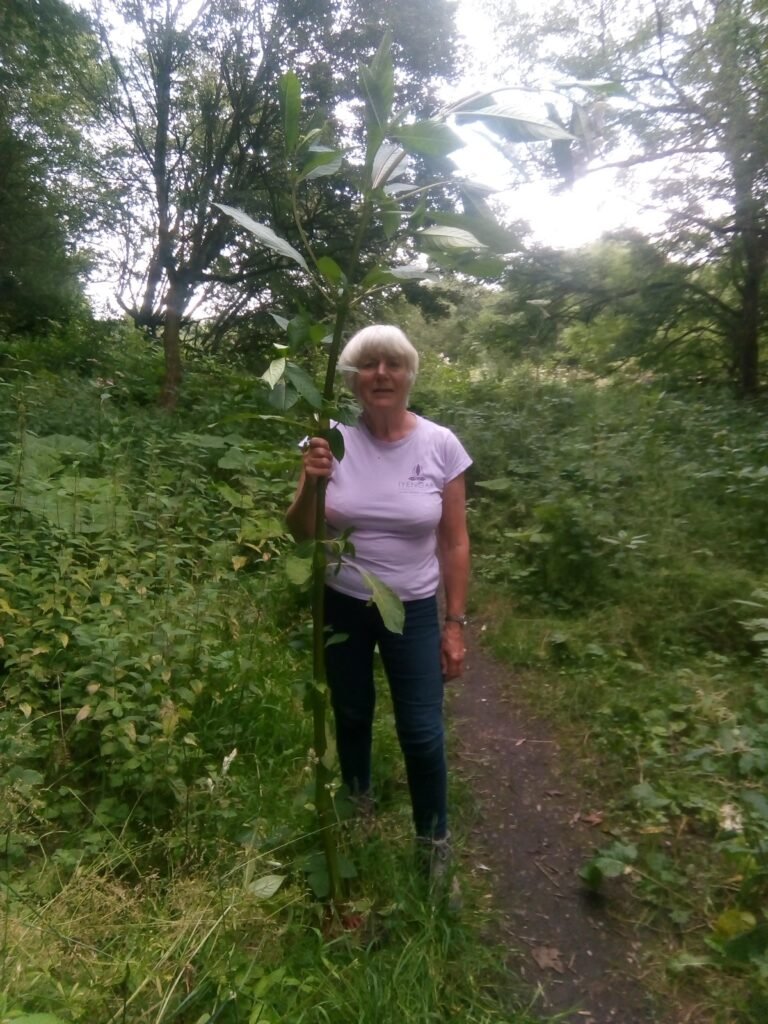
Chris Moore
I have lived in New mills for 35 years. I was involved in setting up Transition New Mills and Nature New Mills.
Since my retirement as a Biology teacher, I have been involved in many Nature-related activities as a volunteer with The Plant monitoring survey, Moors for the future and Transition New Mills. I have participated in many Tree planting initiative in the local area. For the past 10 years I have helped to organise volunteers working to tackle the invasive Himalayan balsam in New Mills. Together with New Mills Festival, I organised the New Mills Nutures Nature event in 2022.
I am currently extending my Nature-related knowledge from plants and trees to participating in a butterfly survey and monitoring the river Goyt.
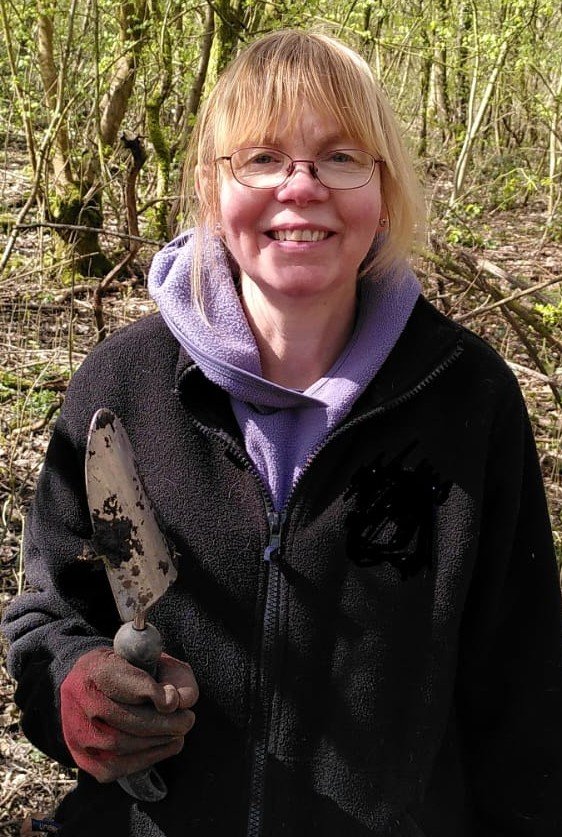
Hazel Body
I have lived in New Mills since 1995. There are so many good things about New Mills, I live in the centre of the town but love that I can be in the countryside in 2 minutes.I have 4 dogs, so spend a lot of my time walking in and around New Mills, it is a beautiful place.
I have been, and still am, involved in a number of different groups in New Mills, I first became involved in Nature New Mills because of the tree planting project, which seemed like a fun and easy way of helping nature.
I have spent many years working in accountancy and currently work as a bookkeeper, so I was happy to join the committee to help with the financial side of running the group.
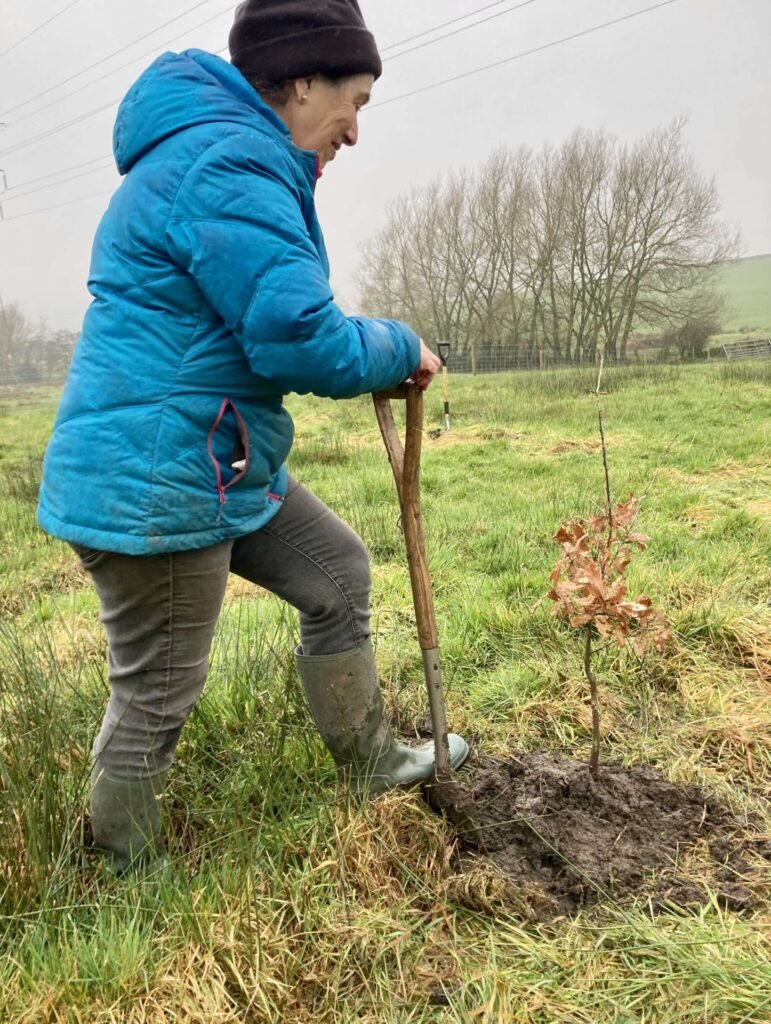
Jill Hulme
New Mills is a beautiful place to live. I love the landscape and the great variety of natural environments in our locality. My special joys are watching dippers on our 2 rivers, hearing and (sometimes) seeing Curlews up on Mellor Moor and insect-watching at my little garden pond. On my Hague Bar allotment I have the bonus of even more wildlife to appreciate.
I joined in with Nature New Mills because there is so much each of us can do to support our threatened natural capital. So, working together I feel enthused and more hopeful that this lovely spot can be protected, enhanced and shared with the next generations.
Also I like getting muddy.
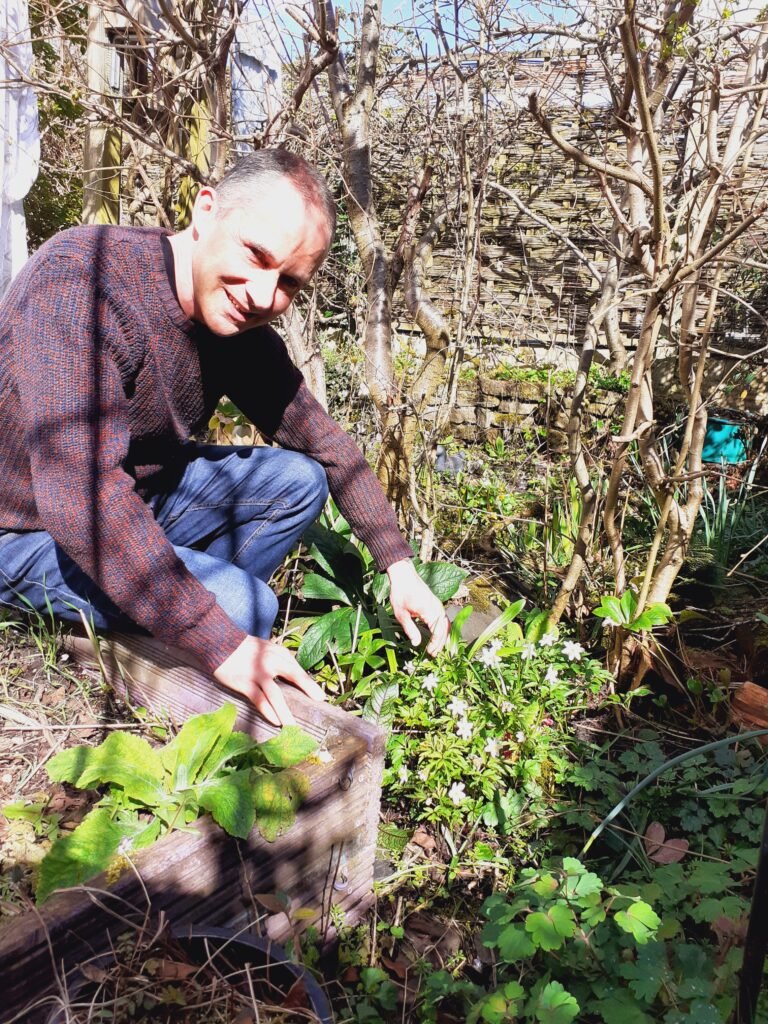
Julian Ashworth
I’m a lifelong environmentalist with an MSc in Environmental Management Operations, and have lived in New Mills for over 20 years. In that time I have helped set up Transition New Mills and the Community Orchard as well as Nature New Mills, and briefly served on the Town Council.
Now working part time for Hope Valley Climate Action has given me more time for volunteering. In addition to helping Nature New Mills I am lead volunteer warden for Derbyshire Wildlife Trust’s Watford Lodge site.
I’m particularly interested in nature recovery and practical projects like wildlife gardening to create and enhance habitats. I’m particularly fond of hedgehogs and wood anemones.
Vacancy
Policies and Procedures
Health & Safety Policy
Statement of Intent
- The policy of Nature New Mills is to provide and maintain safe and healthy working conditions and environment for all our volunteers and users, plus any other people who are directly affected by our activities, such as members of the public at our events.
Responsibilities
- Overall and final responsibility for health and safety at all events and activities organised by Nature New Mills lies with the management committee.
- A member of the Committee will be the nominated lead for Health & Safety. Their role will involve researching and advising the Committee and named responsible volunteers,preparing policy and general template documents for agreement, upholding adherence to the policy, and maintaining central documentation of policies and risk assessments. The lead may need appropriate training to be able to undertake this role satisfactorily.
- The responsibility for specific activities and events will be delegated to a named volunteer for each in advance, and their name will be noted on all relevant risk assessments. This volunteer will be responsible for ensuring that this policy is upheld and delivered on the ground.
- All volunteers involved will be made aware of who is responsible for health and safety.
General Arrangements
- The main activities of Nature New Mills involve events and activities to promote engagement and care for wildlife, both for volunteers and the general public. A risk assessment will be carried out before every authorised event*, relating to all aspects of the event, including: venue, activities, equipment, volunteers, attendees and weather-related aspects.
- Some types of event will be repeated, in which case a general risk assessment will be prepared, which can be adjusted for local conditions at a particular site or day.
- All general risk assessments will be reviewed at least annually, and take account of any emerging or experienced risks encountered in practice.
- We will consider the need (raised in the risk assessment) to have a trained first aider present at events which are open to the public.
- All participants will be made aware, before or at the start of the event, of the precautions they need to take as noted on the relevant risk assessment.
- No volunteer will supervise a public event or activity on their own. At least two volunteers should stay at an event until it officially finishes, and ensure that all remaining participants are accounted for.
- Emergency contact details will be collected before any authorised event where injury is an identified risk, and will be handled in accordance with the Data Protection policy.
- Nature New Mills will hold appropriate public liability insurance to cover its activities.
Specific Risk Assessments
- A risk assessment will be carried out before every authorised event*, relating to all aspects of the event, including: venue, activities, equipment, volunteers, attendees and weather-related aspects. It will consider likelihood and impact, and describe appropriate mitigation.
- The named delegated volunteer for that event / activity will ensure a risk assessment has been carried out, aided and approved by the Committee lead member for Health & Safety.
- Responsibility for observing the decisions made in the risk assessment lies with all volunteers.
- Any new risks identified following the agreement of the risk assessment will be logged, trigger a review and change of any general risk assessment templates, and be referred to in the preparation of future risk assessments.
- Consideration will be made to obtain a record of participants’ acknowledgement of the risks, as explained to them by the lead volunteer for the event.
Authorised Events with an Identified Risk of Injury
- Practical conservation activities that carry a significant risk of injury, identified in the risk assessment, will require the lead volunteer to have a first aid kit on site.
- The management committee is responsible for checking the first aid box contents every quarter.
- There should be at least one participant at events with significant risk of injury with up to date first aid training.
- All accidents are to be recorded. An accident book is located in each first aid box. The Lead Volunteer must inform the Committee H&S lead in the event of a recorded accident within a week of the occurrence, who will document it centrally.
Reasonable Level of Risk
- We will take steps to avoid unnecessary and high levels of risk. However, some activities in natural environments inherently involve some uncontrollable risk. Volunteers and attendees need to be made aware of this fact.
Agreement and Review
This policy will be reviewed every year
Date of agreement: 2nd November 2023.
Committee members: Maria Neilson, Hazel Body, Jill Hulme
Signature (Committee Health & Safety lead): Julian Ashworth
Definitions
- An authorised event is one which is advertised as a Nature New Mills run event in the Events section of the nature New Mills Public Facebook Group.
Safeguarding Policy & Procedures
SAFEGUARDING POLICY
General Definition of Safeguarding:
Safeguarding is a range of activities aimed at upholding an individual’s fundamental right to be safe, free from abuse and neglect.
Being or feeling unsafe undermines relationships and self-belief, the ability to participate and contribute to society.
Our safeguarding policy and procedures apply to children, young people and vulnerable adults. A vulnerable adult is a person aged eighteen or over, dependent or requiring assistance from others in the performance of basic functions; has a severe impairment in the ability to communicate with others; or has a reduced ability to protect themselves from assault, abuse, neglect or exploitation.
This policy aims to ensure that those working with children, young people and vulnerable adults take all reasonable measures to ensure that the risks of harm to the individual’s welfare are minimised; and where there are concerns about their welfare all appropriate actions are taken to address those concerns, working to agreed local policies and procedures in partnership with other local agencies.
Introduction
Nature New Mills is committed to safeguarding children, young people and vulnerable adults from harm.
All children, young people and vulnerable adults have a right to be safe in the activities that they, or their parents and carers choose to do and the services they access.
All children, young people and vulnerable adults have equal rights to protection from abuse and exploitation.
The welfare of children, young people and vulnerable adults is paramount and any suspicion or allegation of abuse will be taken seriously.
All children, young people and vulnerable adults should be encouraged to fulfil their potential, and inequalities should be challenged.
Everybody has the responsibility to support the care and protection of children, young people and vulnerable adults.
We have a duty of care to the children, young people and vulnerable adults with whom we work and with whom our representatives work.
Purpose of this Policy
To protect all children, young people and vulnerable adults who engage in Nature New Mills’ activities from harm.
To ensure that all volunteers (and staff if there are any) at Nature New Mills recognise and accept their responsibilities to develop awareness of the issues which cause harm to vulnerable groups and act appropriately and effectively.
The policy relates to all children, young people and vulnerable adults #regardless of sex, gender, ethnicity, disability, sexual orientation or religion in whatever context they are involved with Nature New Mills.
Policy Statement
Nature New Mills is committed to providing a safe environment for all children, young people and vulnerable adults who have any contact with the organisation.
This policy will be reviewed every two years.
SAFEGUARDING PROCEDURES
General Practices
Nature New Mills will appoint a named Safeguarding Lead, who will oversee policies and procedures, and the handling of any incidents.
Up to date safeguarding policies and procedures to be easily available on the Nature New Mills website
As a general rule, we will require that all children, young people or vulnerable adults are supervised at all times by their responsible adult, unless it is an event where it is explicit that children, young people or vulnerable adults can be left in the care of Nature New Mills staff or volunteers.
Staff and volunteer supervisors of events or projects specifically aimed at children, young people or vulnerable adults, which offer direct, regular access to them should be subject to a disclosure check.
All staff and volunteers should be easily identifiable (name badge etc)
Everyone is to be treated with equal care, respect and dignity
There should be no activity or discussion that is, or could be construed to be, sexually stimulating or inappropriate.
It is not permitted to drive or walk a vulnerable person home alone or to take them to your home.
It must be noted that any one-to-one situation that is not part of your role puts you at risk of allegations.
Anything that is reported to you by a vulnerable person should be treated with respect and handled in a manner in keeping with the safeguarding policy
If you suspect or are told of any form of abuse or inappropriate behaviour it is your responsibility to report it according to the safeguarding procedure.
No child or vulnerable adult should ever be alone and incapable of being observed with a volunteer / organiser
An appropriate supervisor/participant ratio will be ensured for the event or circumstances in question.
Safeguarding Procedures for an Event
An ‘event’ is a publicly advertised event where Nature New Mills is the, or one of, the organiser(s).
A ‘volunteer’ is defined as someone who is leading or controlling the event, not a participant from the public.
Prior to event:
Define event, purpose and target audiences. Note specifically the likely involvement of safeguarded groups.
Complete a site and activity risk assessment form prior to all events, which considers the target audiences and relevant safeguarded groups, and specific risks for them (such as potentially being out of sight of supervisors).
Ensure promotional materials are appropriate for target groups, and refer to safeguarding procedures on website if necessary
Compile a list of known, named volunteers for the event, and their roles (including event leader). If a new person unknown to the committee comes forward, they should be met in person, and informally vetted beforehand.
Volunteers will be briefed, either in person or virtually, on identified risks and mitigation (as in risk assessment), and safeguarding policy and procedure. A signature to confirm receipt and comprehension of the content will be required
Paperwork necessary at the event should be prepared, including an attendance record sheet, and event briefing for participants
During the event
All participants will be briefed in person / writing of the event’s activities and risk management, and register their name and emergency contact details on an attendance sheet. This will signify they have read, understood, and will comply with the briefing. This information, minus emergency contact details, will be kept securely for 28 days after the event, and may be passed on to the relevant authorities if an incident arises.
During or after the event
If an incident is observed by, or reported to, a NNM volunteer:
No intervention needs to be made unless someone’s life is at risk, a crime is in progress, or there is an immediate threat to life or violence; in which case call 999.
Take the matter seriously
Listen carefully
Reassure the person
Stay calm
Do not show shock or disapproval
Only ask questions for clarification
Allow the person to use their own words
Do not push for information or make suggestions
Do not promise to keep secrets
Reassure the person that NNM will take steps to ensure they are protected in the future.
The volunteer must record what the witness/victim said, or what they witnessed, about when and where the incident happened, what happened and who was involved
After the event, if an incident did occur
A written record (by text, on paper or electronic) must be made by the event leader, using only people’s initials to maintain confidentiality, and sent to the safeguarding lead. The report should describe what happened, when, where, who was involved, and what action was taken. If the incident involved the event leader, the report should be made by another event volunteer and sent to the safeguarding lead. If the incident involved the safeguarding lead, the report should be made by the event leader and sent to another committee member. All contact details will be provided in the volunteer briefing.
NNM Safeguarding lead: Jill Hulme, NNM Committee
The Safeguarding Lead should:
Report the incident to Derbyshire Social Care via Starting Point Telephone contact to StartingPoint 01629 533190 or via an online referral.
https://www.ddscp.org.uk/worried-about-child/
For adults https://www.derbyshiresab.org.uk/home.aspx
File the report in a secure area to maintain confidentiality
ensure reports are stored securely and confidentially in accordance with GDPR regulations, for a period to be advised by Derbyshire Social Services.
The committee has the ability to control access to future events if the safeguarding policies are transgressed.
Recognising abuse
It needs to be acknowledged that sometimes children, young people and vulnerable adults are abused. It should also be acknowledged that they may perpetrate abuse.
Someone may abuse or neglect a person by either inflicting harm or by knowingly not preventing harm. People may be abused within their family, in an institutional setting, in their homes or very rarely by someone unknown to them.
Physical abuse includes hitting, shaking, burning, biting, poisoning, suffocating, drowning or using excessive force.
Neglect. A failure to meet a person’s basic physical, emotional and or psychological needs likely to result in serious impairment of the person’s health or development.
Emotional abuse. Persistent emotional ill treatment causing severe and adverse effects on emotional wellbeing or development. This can include verbal attacks, criticising or undermining, taunting, shouting, threatening and rejecting behaviour.
Sexual abuse.
Bullying
Financial abuse including theft, fraud or coercian.
Identifying abuse
Whilst by no means exhaustive the following list outlines some ways in which abuse may be identified. Note, these signs are not always necessarily evidence of abuse and may have innocent explanations:
Changes in behaviour
Unexplained injuries
Fear of certain people
Behaves like a much younger person
Uses inappropriately explicit language
Does not socialise, has few friends
Is unresponsive, nervous, attention seeking or lethargic
Appearance or hygiene deteriorates
A reluctance to participate or to go home
They tell you that are being abused
A third party tells you they are being abused
Disclosure and Barring Checks
Depending on an individual’s role within Nature New Mills they may be asked to undertake a Disclosure and Barring Service check. All data obtained in this regard will be kept confidentially and securely. If an individual has undertaken a DBS check for another organisation Nature New Mills will accept this check on provision of the certificate number and the date it was issued.
Rehabilitation of Offenders
Nature New Mills encourages anyone, regardless of background, to participate in the work we do. Having an unspent conviction will not necessarily prevent someone from working with us. Each case will be treated individually and in confidence. Any risks will be fully assessed and all possible actions to manage those risks will be explored and implemented where possible.
Confidentiality
The legal principle that the welfare of the child is paramount means that considerations of confidentiality which might apply to other situations in the organisation should not be allowed to override the right of the person to be protected from harm. However, every effort should be made to ensure that confidentiality is maintained for all concerned when an allegation has been made and is being investigated.
Financial Procedures
Approved by the management committee on 10th October 2023
General Arrangements.
1. We have a management committee which is elected at the Annual General Meeting.
2. The management committee is responsible for ensuring that we look after our income properly and put it to good use.
3. All monies raised on behalf of the group will be used to further the objectives of the group as set out in the constitution, and for no other cause.
4. The Treasurer will keep appropriate financial records including:
– a spreadsheet recording all financial transactions.
– bank statements.
– details of all income.
– invoices and receipts for all payments.
5. Our financial year ends on end of March.
6. We will prepare accounts at the end of the financial year and have them examined by a suitable person who is independent of the group. The annual accounts will be presented at the Annual General Meeting for approval.
7. Before the start of the financial year, we will consider financial needs and agree a budget.
8. Grant applications will be agreed by the management committee prior to application.
9. A financial report will be prepared for discussion at each committee meeting showing money received, payments and remaining funds. It will also show expected future receipts and payments.
Bank Accounts
1. We have a current account with Lloyds.
2. All bank transactions will go through our current account, if money is to be spent from a savings account it will first be transferred to the current account.
3. At least three members of the management committee will be signatories to the account.
4. Any withdrawals or transfers between accounts will be signed by two of the signatories, or where this is not possible a record of the agreement of at least two of the signatories will be logged for inspection. We expect that one of these signatories will be the treasurer. If not, the treasurer will be given full details of the transaction.
Income
1. We will record all details of income received via bank transfer on the spreadsheet.
2. Grants conditions will be documented, and the spending against grants will be able to be reported separately.
3. We will record all details of cheques received on the spreadsheet, and all cheques received will be banked within 1 month.
4. When we receive cash we will:
a) Issue a receipt and keep a copy, for any donations from named individuals or businesses.
b) Two members of the group will count the money, make a note of the total and sign for it.
c) Details of the cash received will be entered on the spreadsheet.
d) The cash will be banked within one month.
5. The Committee will agree donations on a case by case basis
6. The treasurer will keep files of paperwork relating to bank transfers, cheques and cash received.
Buying goods and services
1. The management committee will agree payments in advance. This will either be shown in our annual budget or by the committee with an auditable trail.
2. The treasurer will keep a file of all paperwork and confirm goods/services and invoices are as agreed before paying them.
3. We will include consideration of cost, quality, provenance, ease/speed of purchase/delivery and sustainability and ethics when making purchases.
Payments by cheque, direct debit, bank transfer or debit card.
1. We will not sign a cheque, or authorise a direct debit, bank transfer or debit card payment without the documentation (on agreement and proof of spend) to support the payment.
2. Two signatories are required on each cheque. Cheque stubs will be completed at the time of payment.
3. We will never sign a blank cheque.
4. Bank transfers, standing orders and direct debit payments will require two signatures in line with Lloyds’ on line banking procedures.
5. All other payments (eg. Debit card payments and cash withdrawals) must be authorised in advance by two signatories on our own payment form. The payment form will include the following details: payee; date; type of payment and space for two signatures.
6. We will record details of all payments on the spreadsheet including: cheque number/type of payment; date; who signed the cheque.
Expenses
1. Group members must have recorded authorisation before any expenditure is undertaken on behalf of the group.
2. Group members must complete and sign an expense claim form to be reimbursed; this should have original invoices/receipts or evidence of spend attached to be approved.
3. The expense claim will be checked and signed by two members of the management committee before being paid.
4. Payments will be made within 20 working days of a correctly filled expense claim form being submitted to the treasurer. The preferred method of payment will be by bank transfer.
Nature New Mills Constitution
The group name is Nature New Mills (NNM) hereafter described as ‘the group’.
It is an unincorporated community group.
AIM OF THE GROUP
- To support the community in helping nature recover, by protecting habitats and endangered species, and increasing the variety and abundance of wildlife
OBJECTIVES
- Increase interest and enthusiasm for nature throughout the whole community
- Cultivate a thriving network of local people and organisations, knowledge and research
- Generate a feeling of empowerment to motivate personal and community actions to achieve the aim of the group
- Facilitate the delivery of practical community and private projects to achieve the group’s strategy
POWERS
- Raise funds through application to grant making bodies, and to invite and receive contributions and donations
- To pay for:
- services needed from other groups and persons to enable the group to achieve its objectives.
- appropriate venues to carry out activities.
- approved out-of-pocket expenses to its members, volunteers and to others who incur such expense on the group’s behalf
- equipment in order to fulfil the objectives. Any purchases will remain the property of the group.
- Take out necessary insurances
- Work in partnership with other community groups, charities, statutory agencies and the local business community to achieve the objectives
- Become members of relevant local, regional or national organisations
- To do all other lawful things as will enable the group to achieve its aim.
MEMBERSHIP
- Is available to anyone who lives or works in New Mills or surrounding areas and has an interest in wildlife and nature
- People of any age can become members but those under 16 years of age will require parental permission to share their contact details
- Is dependent on agreement to this Constitution and any policies on working practices agreed by the Committee.
- Members can vote at Annual and General Meetings.
- The group will only collect and securely store personal data in order to inform members of group activities or to support funding applications.
- Membership of the group may be terminated for good and sufficient reason. Any person whose membership is so terminated should have the right to appeal against the decision, when they can be accompanied by a friend to a special committee meeting held for this purpose. The committee and the member can call upon other agencies to support this process.
MANAGEMENT COMMITTEE
The Committee will be responsible for:
- developing the group’s strategy
- prioritising projects and activities in line with their impacts and the group’s resources
- looking after the group’s financial and physical assets
- undertaking administrative tasks, including obtaining insurances
- supporting communication, networking and publicity
- ensuring accountability
- ensuring management functions are robust and resilient
It will consist of between four and six people and meet at least four times per year.
Chair, treasurer and secretary positions will be held by committee members who can agree to instigate other roles as necessary. The role of Chair cannot be held by the same person for more than three consecutive years.
Decisions will be made by consensus whenever possible. If consensus cannot be reached there will be a ballot with the Chair having an additional casting vote where there are equal numbers of votes cast.
COMMITTEE MEETINGS
Meetings will take place at least four times a year, or more frequently if three members or more agree.
Details of planned meetings will be emailed to committee members at least a week in advance
Decisions cannot be made unless there are at least three people attending the meeting and will be accepted with a two thirds majority
Minutes of meetings will be published on-line or emailed directly to those requesting them
GENERAL MEETINGS
An Annual General Meeting will be held within 6 weeks of the end of the financial year.
Details of General and Special meetings will be provided at least two weeks before the event via social media, email and posters.
FINANCES
The group will hold a bank account, which will be operated in accordance with the Finance Policy to require safeguards of multiple signatories to authorise payments or formally agree money transfers before payments can be made out of the account.
The treasurer will be responsible for managing the account in line with the group’s Finance Policy and will present a summary report at each Committee and Annual General Meeting.
Nature New Mills will not distribute income or property to its members during its lifetime.
ALTERATIONS TO CONSTITUTION
The committee will review this constitution annually.
The Constitution will be reviewed by the members at least once every two years.
Any alterations to this constitution will need to be ratified at an Annual General Meeting or at a specially called General meeting if the changes are not unanimously agreed by all committee members.
CLOSING DOWN THE GROUP
If the committee believes the group needs to be closed down the reasons for and plans on how to accomplish this will be shared with and voted upon by the membership at a Special General Meeting, with a majority required to endorse.
In these circumstances committee officers will ensure that any assets remaining after debts have been paid will be donated to an organisation or organisations of their choice, with similar aims. Likewise, any equipment held by the group will be offered to local community organisations.
Agreed by the Management Commitee
17th July 2023 at the Annual General Meeting
V3 amended by unanimous agreement (Committee WhatsApp group 24th Oct 2023)
Review due: before AGM 2024
Summaries of Committee meetings are posted in the News section and in our Facebook group.